
Sandstone has been used in construction for thousands of years, and for good reason. It is workable, widely available, and when matched correctly to a project, it performs exceptionally well over decades. But not all sandstone is created equal, and choosing the wrong type for your specific application is one of the more costly mistakes a homeowner or contractor can make.
This guide breaks down what you actually need to know before selecting sandstone masonry for any project, whether you are building a retaining wall, restoring a chimney, laying a patio, or repointing an older structure.
What Is Sandstone and Why Does It Matter for Masonry Work
Sandstone is a sedimentary rock formed from compressed sand particles, typically quartz, feldspar, and other minerals bound together by a natural cementing agent. That cementing agent, along with the mineral composition of the sand grains themselves, plays a major role in how the stone behaves once it is installed.
In masonry, sandstone is used for everything from wall cladding and chimney construction to steps, patios, lintels, and decorative stonework. Its natural layering, called bedding planes, gives it a distinct texture that many homeowners prefer over manufactured alternatives. But those same bedding planes also determine how the stone should be oriented during installation, and ignoring that detail leads to premature deterioration.
The point is this: sandstone masonry is not a one-size-fits-all material. The decisions you make before the first stone is laid will affect how the project looks, performs, and holds up for years to come.
Understanding the Types of Sandstone Used in Masonry
When you start researching sandstone for a masonry project, you will quickly notice that it gets classified two different ways: by composition and by cementation. Both matter, and understanding the difference helps you ask better questions when talking to suppliers and contractors.
Types of Sandstone by Composition
Composition refers to the mineral makeup of the sand grains themselves. This is the classification system most commonly used in practice and the one you are most likely to encounter when sourcing stone.
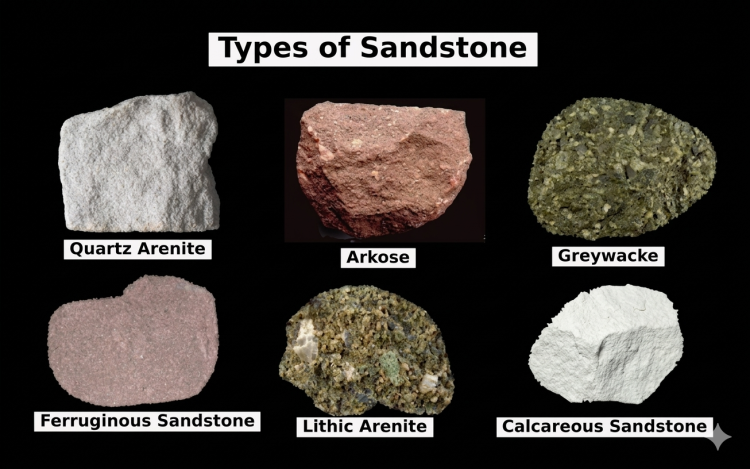
Quartz sandstone is the purest and most durable of the group. It is composed almost entirely of quartz grains, which makes it highly resistant to weathering, moisture absorption, and freeze-thaw cycles. For exterior sandstone masonry in climates that see cold winters and wet springs, quartz sandstone is generally the most reliable long-term choice. It is harder to cut and shape than softer varieties, but that hardness is exactly what you want in an exposed chimney, retaining wall, or patio installation.
Arkosic sandstone, sometimes called arkose, has a high feldspar content and tends to be coarser in texture. It often presents in pinkish, reddish, or grey tones depending on the feldspar and iron mineral content in the stone. Arkose is widely used in decorative masonry and exterior cladding, but feldspar weathers faster than quartz, so it requires more attention to waterproofing and maintenance in wet climates. It performs well in sheltered applications and can look exceptional on facades and accent work where direct water exposure is limited.
Feldspathic sandstone is similar to arkose but contains a broader mix of minerals alongside the feldspar. The texture tends to be more varied, and the stone can range considerably in color and hardness depending on where it was quarried. Like arkose, it is better suited to applications where it is not taking the full brunt of weather exposure. It is frequently found in historic construction and is often what you encounter when restoring older structures throughout the Midwest.
Graywacke is the least refined of the four. It is a dark, poorly sorted sandstone that contains a mix of quartz, feldspar, and rock fragments in a fine-grained matrix. It tends to be dense and hard, but it is not considered a premium masonry stone because of its inconsistent composition and appearance. You are unlikely to source it intentionally for a residential project, but it is worth knowing what it is so you can identify it if it shows up in an older structure you are restoring.
Types of Sandstone by Cementation
Cementation refers to the mineral that binds the sand grains together. While composition tells you what the stone is made of, cementation largely determines how it holds up against moisture, which is the single biggest threat to exterior masonry in most climates.
Silica-cemented sandstone is the most durable. The quartz or silica binding agent is highly resistant to water and chemical weathering, which is why silica-cemented varieties tend to outlast other sandstones in exposed applications. When you are looking at quartz sandstone specifically, it is almost always silica-cemented, which is a large part of why it tops the composition rankings for exterior use.
Calcite-cemented sandstone is softer and more porous. The calcite binder dissolves more readily in the presence of acidic water, including rainwater, which means this variety is more vulnerable to surface erosion and joint failure over time. It can work well in sheltered or interior applications but requires careful consideration before being used in fully exposed exterior sandstone masonry in regions with significant freeze-thaw activity.
Iron oxide-cemented sandstone gets its warm red, orange, and brown tones from iron minerals in the binding matrix. It sits between silica and calcite varieties in terms of durability and is widely used in decorative masonry and historic construction. The color, while visually distinctive, can vary significantly from quarry to quarry and even within a single batch, which is an important consideration when matching existing stonework on a restoration project.
In practice, composition and cementation often overlap. A quartz sandstone is frequently silica-cemented. An arkosic sandstone might be calcite or iron oxide-cemented. Knowing both gives you a more complete picture of how a specific stone will perform and helps you have a more informed conversation with your supplier before committing to a material.
Matching Sandstone to the Specific Project
The type of sandstone masonry project you are undertaking should drive your material selection, not the other way around.
Chimneys and fireplaces demand stone that can handle thermal expansion, moisture exposure from above, and freeze-thaw stress across every face. Quartz sandstone is typically the right call here. The stone needs to be dense enough to resist water penetration but also compatible with the mortar being used, since mismatched mortar hardness is one of the most common causes of sandstone chimney failure. A mortar that is harder than the stone will cause the stone face to crack and spall before the mortar joint gives way, which is the opposite of what you want.
Retaining walls put sandstone under compressive load and constant ground moisture pressure. Density and durability are the priorities. The stone also needs to be oriented correctly relative to its natural bedding planes. Sandstone installed on edge rather than on its natural bed will delaminate over time as moisture works its way into the layers. Any mason worth hiring will know this, but it is worth asking about directly.
Patios and pavers involve sandstone that will be walked on, exposed to rain and standing water, and in some cases subjected to freeze-thaw cycles from below. For this application, you want a harder, denser variety with low porosity. Sealing is typically recommended regardless of the stone type, but sealing a high-porosity arkosic sandstone and expecting it to perform like a quartz variety is wishful thinking.
Decorative and accent work on exterior facades, steps, and window surrounds is where you have a bit more flexibility on stone type, provided the installation is sheltered from direct water exposure. This is also where color consistency becomes more important, particularly on restorations where the new sandstone needs to blend with existing material.
Chimney and wall restorations on older homes present a unique challenge. Many historic structures throughout the Greater Cincinnati area and the broader Midwest were built using regionally quarried sandstone that may no longer be commercially available. Matching the original stone requires not just the right color but the right texture, porosity, and hardness. Using a harder modern replacement stone next to softer original sandstone can cause the old stone to deteriorate faster, as water and movement stress get redirected into the weaker material.
Porosity, Absorption, and Why They Matter More Than You Think
One of the most overlooked factors in sandstone masonry selection is water absorption rate. Sandstone is inherently porous, but the degree of porosity varies considerably between stone types and even between quarries producing the same general variety.
A high absorption rate means the stone takes in moisture readily. In a climate with cold winters, that absorbed moisture freezes and expands inside the stone, causing the face to pop off in a process called spalling. Over enough freeze-thaw cycles, even a well-installed sandstone wall can deteriorate significantly if the wrong stone was selected for the exposure conditions.
When sourcing sandstone, ask the supplier for absorption rate data. Any reputable stone supplier will have this on hand. As a general rule, sandstone intended for fully exposed exterior masonry should have an absorption rate on the lower end of the spectrum for its type. For sheltered or interior applications, higher absorption rates are more tolerable.
Waterproofing treatments can reduce absorption, but they are a supplement to good material selection, not a substitute for it. A breathable silane or siloxane-based sealer applied to appropriate sandstone masonry will extend the life of the installation. Applying a film-forming sealer to high-porosity stone and expecting it to solve a moisture problem is a mistake that leads to trapped moisture, efflorescence, and accelerated deterioration.
Color, Texture, and the Matching Problem
For new construction, color and texture are primarily aesthetic decisions. For restoration work, they are technical ones.
Sandstone color is determined by its mineral composition and iron content. Colors range from pale cream and buff tones through golden yellows, warm reds, and deep browns, with grey and greenish tones appearing in some feldspathic and graywacke varieties. The challenge with restoration work is that sandstone weathers over time, and freshly installed stone almost never matches aged stone on a first look. An experienced mason accounts for this and selects stone that will weather toward the existing color rather than trying to achieve an exact match straight from the quarry.
Texture matters for both appearance and performance. A smoother, tighter surface sheds water more effectively than a rough or heavily textured face. For exposed applications in wet climates, surface texture is a practical consideration, not just an aesthetic one.
When matching existing sandstone on a restoration project, pull a small sample of the original stone and bring it to multiple suppliers. Color photographs are not reliable for this exercise. The actual stone tells a more complete story about grain size, texture, mineral content, and likely quarry source than any image can.
Mortar Selection for Sandstone Masonry
Choosing the right sandstone is only part of the equation. The mortar that holds it together has to be compatible with the stone, and this is where a lot of otherwise decent masonry work goes wrong.
The general rule for sandstone masonry is that the mortar should be softer than the stone. This allows the mortar joint to flex and absorb stress from thermal movement and settlement, rather than transferring that stress into the face of the stone. For most sandstone applications, a lime-based mortar or a lime-portland blend is appropriate. Pure portland cement mortars are typically too hard and rigid for sandstone, and using them on historic or softer stone varieties can cause significant damage over time.
The joint profile also matters. A tooled concave joint sheds water away from the face of the stone better than a flush or proud joint. On sandstone masonry that will face heavy rain or snow exposure, joint profile is a practical waterproofing consideration, not just a finishing preference.
This is particularly important in the Midwest, where temperature swings between seasons put masonry joints through significant stress. Getting the mortar mix right from the start is far cheaper than repointing failed joints a few years down the road.
Questions to Ask Before You Buy or Hire
Whether you are sourcing stone yourself or working with a masonry contractor, these are the questions worth asking before anything is purchased or installed.
What type of sandstone is this specifically, and where was it quarried? What is the absorption rate? What is the cementation type and how does that affect its suitability for this climate? How has it performed in similar exterior applications? If it is a restoration project, does the contractor have experience matching existing sandstone masonry rather than simply replacing it with whatever is available and close in color? What mortar mix will be used and why is it appropriate for this specific stone type? Is waterproofing part of the scope and if so, what product and application method?
A contractor who can answer these questions without hesitation is worth working with. One who brushes them off is not, regardless of what the estimate says.
The Cost of Getting It Wrong
Poor sandstone selection tends to show up slowly and then all at once. Spalling, joint failure, efflorescence, water infiltration behind the stone face, and structural movement are all common consequences of mismatched material and application. The repair costs on a failed sandstone masonry installation routinely exceed the cost of getting the material selection right in the first place.
This is especially true for chimneys. A sandstone chimney built or repaired with incompatible mortar or the wrong stone type will often need to be partially or fully rebuilt within a decade. The same chimney, built correctly with appropriate materials and proper joint profiles, can last for generations with routine maintenance.
Sandstone masonry done right is one of the most durable and visually distinctive choices available for residential construction and restoration. Getting there requires treating material selection as the serious technical decision it is, not an afterthought.
If you are planning a sandstone masonry project and want it done correctly the first time, explore our masonry and stonework services to see how Oberer Construction handles material selection, installation, and long-term performance. Have a specific project in mind or not sure where to start? Call us at (513) 829-5270 and talk directly with a mason who has been doing this work since 1974.
