
If you’ve been searching for ways to fix crumbling mortar on your Cincinnati home, you’ve probably run into both terms within the first five minutes: tuckpointing and repointing. Most homeowners assume they’re interchangeable. They’re not, and knowing the difference can save you money, protect your brickwork, and help you avoid paying for a service you don’t actually need.
Both processes deal with mortar joints, the material between individual bricks that holds a wall together and keeps water out. But the goals, the techniques, and the price tags attached to each are different enough that mixing them up can leave you either overpaying for cosmetic work when you needed structural repair, or underpaying for a quick fix when your home needed something more thorough.
Here’s what separates the two, how to know which one your home actually needs, and why the distinction matters even more for older homes across Fairfield, Cincinnati, and Northern Kentucky.
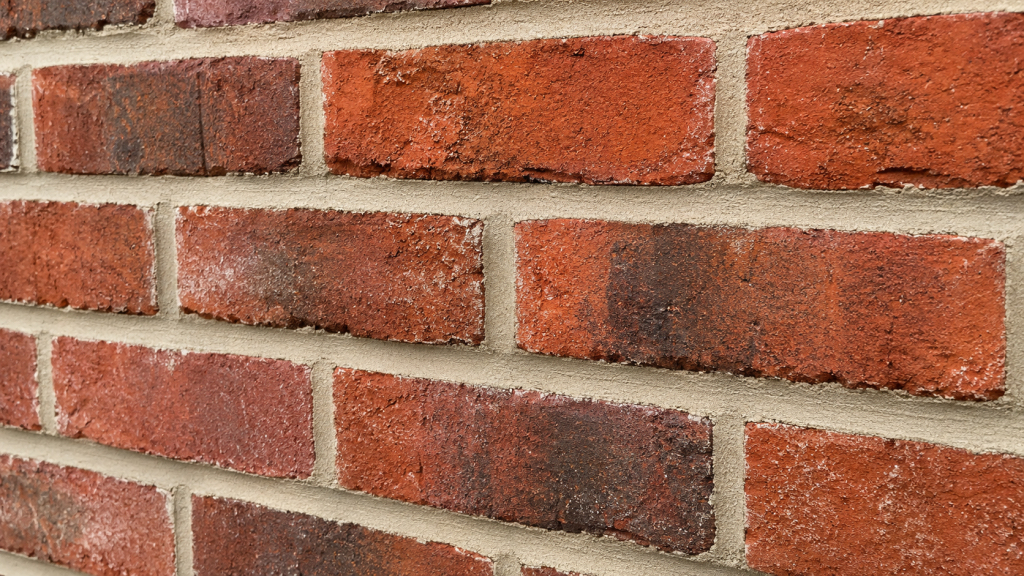
What Repointing Actually Involves
Repointing is the more fundamental of the two processes. It’s the act of removing deteriorated or damaged mortar from between bricks and replacing it with fresh mortar that matches the original as closely as possible in color and composition.
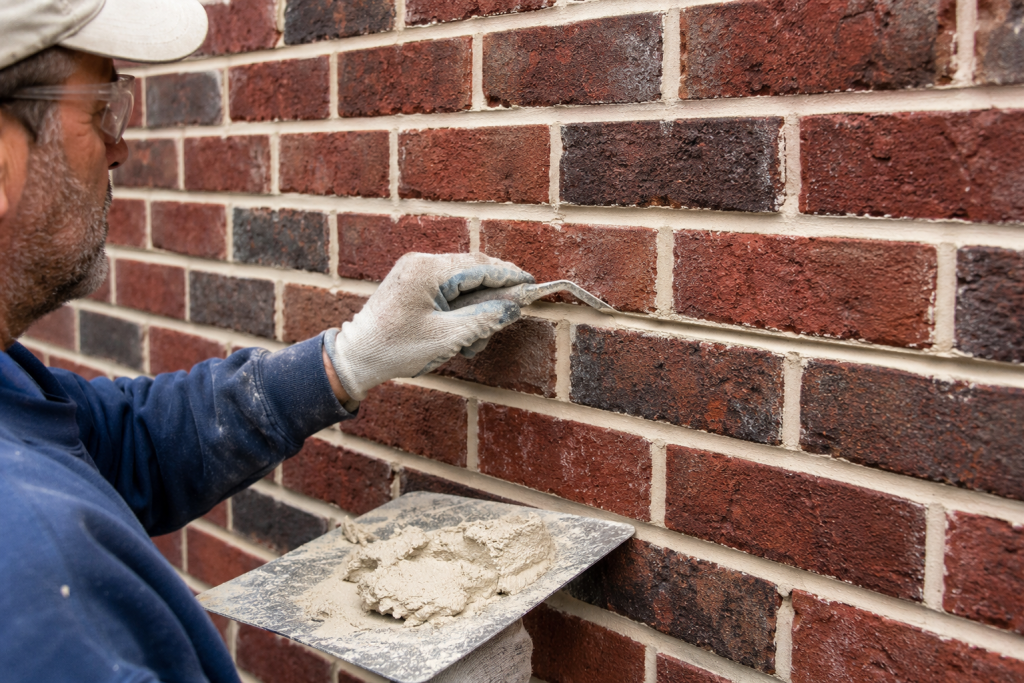
The process starts with grinding or chiseling out the old mortar to a sufficient depth, usually about two to two and a half times the width of the joint. This isn’t a surface-level patch job. Going too shallow means the new mortar won’t bond properly and will fail again within a few years. Once the old material is cleared out, new mortar is packed into the joint in layers and tooled to match the surrounding brickwork.
The purpose of repointing is structural. It stops water from getting behind the brick face, stabilizes bricks that have started to shift, and restores the wall’s ability to handle freeze-thaw cycles without cracking further. This is the service you need when mortar joints are visibly recessed, crumbling, or missing altogether, or when you’re seeing water stains on interior walls near an exterior brick surface.
Repointing doesn’t try to make the wall look different than it did originally. Done well, it’s invisible. The new mortar blends into the old wall so seamlessly that nobody would guess any work had been done at all.
What Tuckpointing Actually Involves
Tuckpointing starts with the same foundation as repointing but adds an extra step. After the joint is filled with mortar that matches the brick color, a thin line of contrasting mortar, usually a lighter shade, is applied down the center of the joint to create the illusion of fine, perfectly uniform lines between bricks.
This technique dates back to 18th century England, where masons used it to make ordinary brick look like the more expensive, precisely cut stone that wealthier clients wanted. The trick worked because from a distance, the contrasting lines trick the eye into seeing crisp, narrow joints rather than the actual, slightly irregular ones underneath.
Today, tuckpointing serves the same visual purpose. It’s applied when a homeowner wants brickwork to look sharp, uniform, and freshly finished, not just structurally sound. Because tuckpointing includes the same mortar replacement step as repointing, it does still offer some protective benefit. But its primary function is cosmetic. It’s the choice for a front-facing wall, a fireplace surround, or any brick surface where appearance matters as much as durability.
The Real Difference Between Tuckpointing and Repointing
Strip away the marketing language and the difference comes down to one extra step. Repointing removes old mortar and replaces it. Tuckpointing does that, then adds a decorative contrasting line on top.
Repointing is about function. It answers the question of whether your wall will hold up against another Ohio winter. Tuckpointing is about form. It answers the question of whether your brickwork will look precise and polished.
This is also where a lot of homeowners get misled. Some contractors use the terms interchangeably, either out of habit or because they’re hoping to charge tuckpointing rates for what is really basic repointing work. If a contractor quotes you for tuckpointing but never mentions a contrasting mortar line, ask directly what technique they’re using and why. A contractor who genuinely understands both processes will explain the difference without hesitation.
How to Tell Which One Your Home Needs
The condition of your existing mortar joints is the clearest indicator of which service makes sense.
If you’re noticing cracked, crumbling, or recessed mortar, bricks that feel loose to the touch, or water stains appearing on interior walls near an exterior brick surface, that’s a sign of structural deterioration. Repointing is the priority here. Cosmetic upgrades don’t matter much if water is actively working its way into the wall behind the brick.
If your mortar joints are structurally sound but look uneven, discolored, or simply tired compared to when the home was built, tuckpointing is worth considering. This is common on homes where the brickwork itself has aged well but was never particularly precise to begin with, or where a previous repair job left mismatched or unevenly toned mortar behind.
A general rule that many masonry professionals use: if less than half of your mortar joints show visible damage, targeted repointing of just those areas is usually sufficient. If more than half the joints on a wall or chimney are compromised, a full repointing project makes more sense than patching individual sections.
It’s also worth noting that these two techniques aren’t mutually exclusive. A wall can be repointed first to restore structural integrity, then tuckpointed afterward if the homeowner wants the finished, decorative look. The reverse isn’t really possible. You can’t tuckpoint over structurally failing mortar and expect it to hold.
Why This Distinction Matters More for Older Cincinnati Homes
Cincinnati, Fairfield, and the surrounding Northern Kentucky communities have no shortage of homes built decades ago using traditional brick and lime-based mortar. That combination of age and material makes accurate diagnosis especially important.
Older lime mortar behaves differently than the modern portland cement mortar used in newer construction. It’s softer and more breathable, which was intentional. It allows moisture to escape rather than trapping it behind the brick face. The problem comes when a contractor unfamiliar with older masonry uses a modern, harder mortar mix to repoint or tuckpoint an older wall. The mismatch in hardness causes the brick itself, which is softer than the new mortar, to spall and crack over time as it takes on stress the mortar should be absorbing.
This is where local experience matters. A contractor who regularly works on the housing stock around Fairfield, Hamilton, and the greater Cincinnati area will know to match mortar composition to the age of the brick, not just the color. Getting this wrong doesn’t just waste money on a repair that fails early. It can accelerate damage to bricks that were otherwise in decent shape.
Ohio’s freeze-thaw winters add another layer of urgency. Water that gets into a compromised mortar joint in the fall will freeze and expand over the following months, widening cracks and loosening bricks further. This is why repointing work identified in late summer or early fall should generally get addressed before winter sets in rather than waiting until spring.
Cost Differences Between the Two
Because tuckpointing requires an additional step and a higher level of precision to get the contrasting lines straight and even, it typically costs more per linear foot than straightforward repointing. Repointing is generally the more affordable and more commonly needed of the two services, since most masonry repairs are driven by structural concerns rather than aesthetics.
That said, cost comparisons only make sense when you’re confident the scope of work is accurate. A repointing quote that seems unusually low compared to others may indicate a contractor planning to grind out less mortar than necessary or use a mortar mix that isn’t suited to your home’s brick. A detailed, in-person estimate that specifies joint depth, mortar type, and the extent of the affected area is the best way to compare quotes accurately.
What Happens When the Two Get Confused
Homeowners run into trouble in two main scenarios. The first is paying for tuckpointing when the brickwork actually needed structural repointing across a wider area. The decorative line looks good initially, but if the underlying mortar wasn’t properly replaced to sufficient depth, the joint fails again within a few years and the cosmetic work goes with it.
The second scenario is the opposite: hiring someone for basic repointing on a highly visible area, like a front porch or chimney facing the street, when the homeowner actually wanted the finished, uniform look that tuckpointing provides. The structural work holds up fine, but the homeowner is left dissatisfied with the appearance and may end up paying for a second round of work to get the look they wanted in the first place.
Both situations come down to the same root cause: not having a clear conversation upfront about what each technique does and which one matches the actual goal, whether that’s stopping water intrusion, improving curb appeal, or both.
Choosing a Contractor Who Understands Both
Masonry work isn’t something to guess your way through. Mortar composition, brick behavior, and moisture management all interact in ways that aren’t obvious to someone outside the trade. A masonry contractor who genuinely understands the difference between tuckpointing and repointing will start by inspecting your brickwork in person, identifying the extent of joint deterioration, and recommending the technique that matches what your home actually needs rather than defaulting to whichever service pays better.
For homes across Fairfield, Cincinnati, and Northern Kentucky, that inspection should also account for the age of the brick and the type of mortar originally used. What works on a house built in 2010 isn’t necessarily right for one built in 1955.
If you’re seeing cracked mortar, discolored joints, or loose brick and you’re not sure whether your home needs tuckpointing, repointing, or both, explore our tuckpointing services here for a closer look at how we assess and repair mortar joints on homes throughout the Cincinnati area, or call us at (513) 829-5270 to schedule a free, in-person estimate.
